

Pronunciation is one of the most overlooked aspects of learning English yet it can make or break how well you're understood. Strong vocabulary and grammar mean little if your pronunciation is unclear.
What Is Phonetics?
Phonetics is the study of speech sounds and how they are produced. In English learning, it gives you a reliable system for pronouncing words correctly instead of guessing from spelling, which in English is notoriously unreliable.
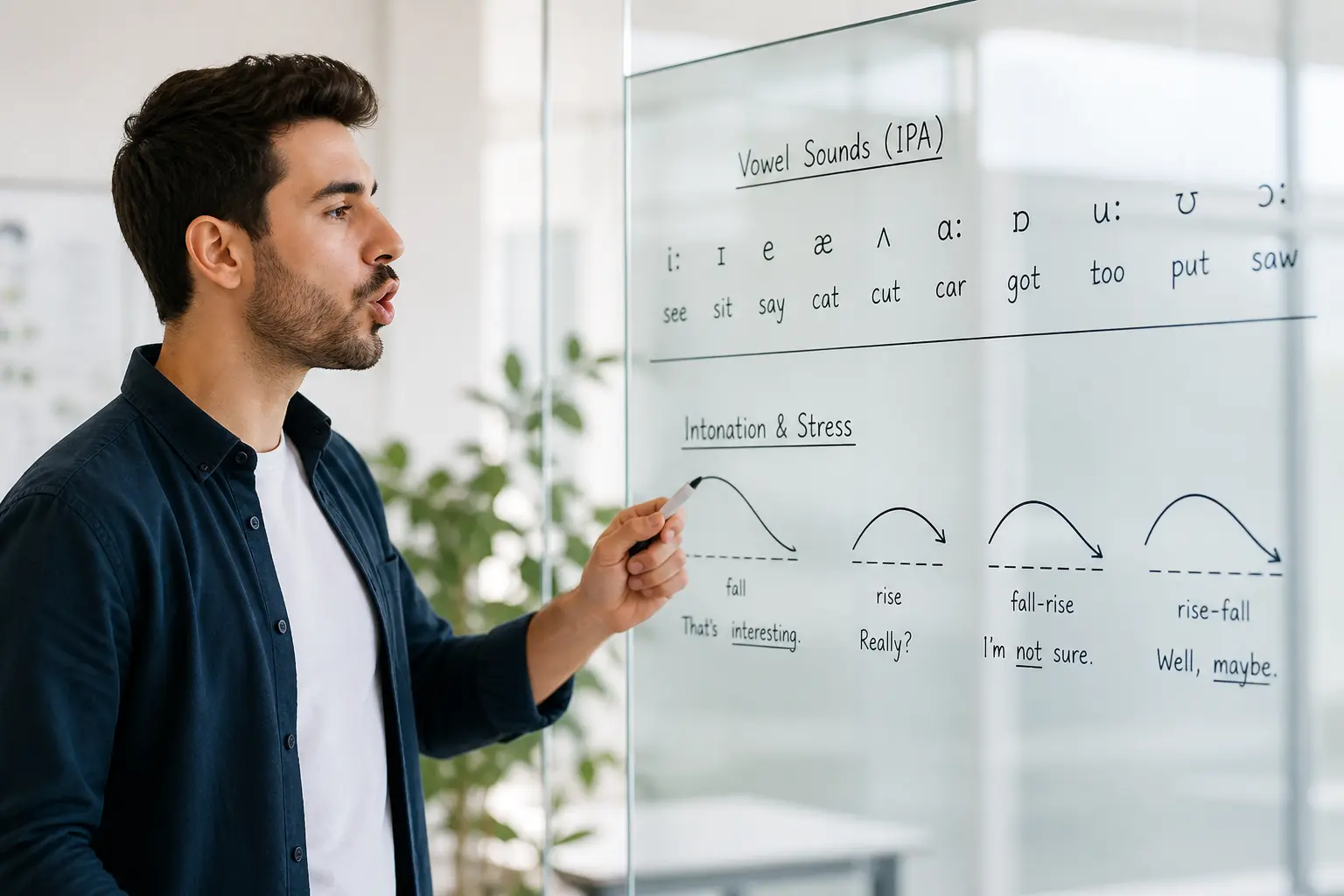
The "International Phonetic Alphabet (IPA)" is the key tool here. Each symbol represents one specific sound, so you can look up any word and know exactly how to say it.
Stress, Intonation, and Rhythm
Getting individual sounds right is just the start. Three elements shape natural-sounding speech:
- "Stress" — Stressing the wrong syllable can make a word unrecognizable to a native listener.
- "Intonation" — The natural rise and fall in pitch that makes speech sound expressive, not flat.
- "Rhythm" — The flow and pace that separates textbook English from real spoken English.
How to Practice
- Listen to native speakers and pay attention to how they speak, not just what they say.
- Try shadowing replay a short clip and mimic the speaker's tone and rhythm.
- Record yourself to spot gaps you wouldn't notice while speaking.
Consistency matters more than long sessions. Even 10–15 minutes of daily practice leads to real improvement over time. At English Council, our phonetics course trains students to speak clearly and confidently from IPA basics to mastering stress and intonation. Ready to find your voice?
Phonetics
May 04, 2026
Improve Your Pronunciation with Phonetics
✦
AI Summary
Pronunciation is a key but often ignored part of English learning. Understanding phonetics, IPA, stress, intonation, and rhythm helps you speak clearly and confidently. With consistent practice and guidance, you can improve your spoken English significantly